Reels vs. Feed Posts: Which Delivers the Best ROAS?

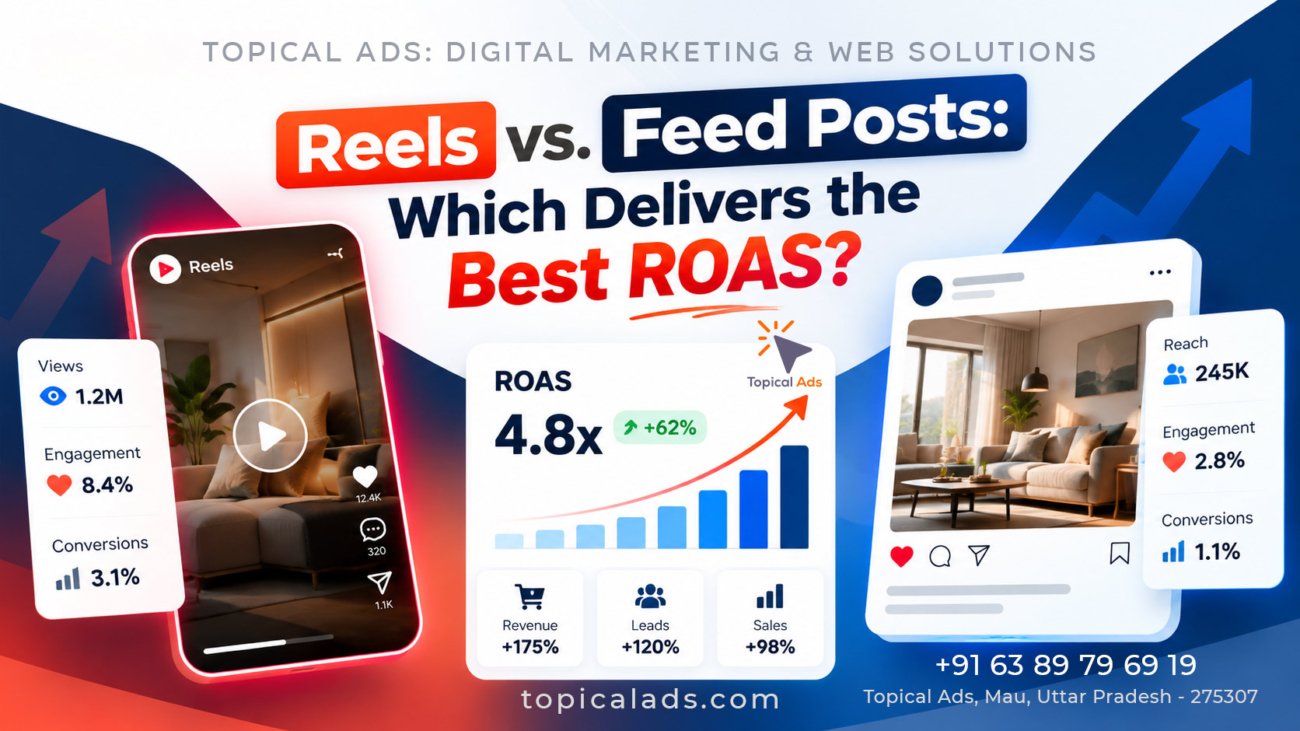
Reels vs. Feed Posts: Which Delivers the Best ROAS?

The Ultimate Ad Spend Dilemma: Reels or Feed Posts?

If there is one question that keeps performance marketers and business owners up at night, it’s this: “Where should I put my ad budget to get the highest Return on Ad Spend (ROAS)?”

Over the last few years, the digital advertising landscape has undergone a massive shift. Short-form video has completely taken over our screens, with platforms heavily favoring dynamic, fast-paced content. But does high engagement automatically translate to high conversions? Or does the classic, static feed post still hold the crown when it comes to actually driving sales and generating qualified leads?

The truth is, blindly throwing your budget at the newest trend—or stubbornly sticking to old formats—is the fastest way to burn through your ad spend. The “Best ROAS” doesn’t come from guessing; it comes from understanding the psychology behind how users interact with different ad placements.

In this breakdown, we are putting Instagram and Facebook Reels head-to-head against traditional Feed posts. We’ll look at the data, the user intent, and the exact strategies we use at Topical Ads to squeeze every ounce of ROI out of our clients’ campaigns.

Let’s dive into which format actually wins the ROAS battle.

The Numbers: Reels vs. Feed Ads

Looking at the latest 2026 cross-industry benchmarks, the performance gap between these two formats is stark. They are not competing against each other; they are playing two entirely different sports.

Instagram/Facebook Reels

  • Average CPM ~$7.40 (Cheapest on Meta)
  • Conversion Rate ~1.8%
  • Average CTR ~0.74%
  • Best Use Case Cold Audience Prospecting

Facebook/Instagram Feed

  • Average CPM ~$11.50 – $13.60
  • Conversion Rate ~2.8%
  • Average CTR ~1.20% – 1.50%
  • Best Use Case Retargeting & Closing

The Case for Feed Posts (The Conversion Anchor)

Why Static Ads Still Command Premium ROAS

With all the hype surrounding short-form video, it is easy to assume that static feed posts (single images or carousels) are a thing of the past. But in the world of performance marketing, the feed post remains an absolute powerhouse for bottom-of-the-funnel conversions.

Why? Because of user intent and consumption speed.

When a user is scrolling through their feed and stops on a static image or a carousel, they are in a reading mindset. They have the time to absorb a headline, swipe through features, and read a detailed caption.

Here is where Feed Posts dominate the ROAS charts:

  • Retargeting Campaigns: If someone has already visited your landing page, a highly targeted static ad with a clear discount code or a strong Call-To-Action (CTA) is often the most cost-effective way to bring them back. You don’t need to entertain them anymore; you just need them to click.
  • Complex Product Explanations: Carousels allow you to break down features, pricing comparisons, or step-by-step processes (like explaining a specialized service) far better than a fast-moving video.
  • Lower Cost Per Mille (CPM): Because video inventory is highly competitive, static ads often benefit from lower CPMs. If your ad creative is highly relevant, a lower CPM directly translates to a higher ROAS.

The Verdict for Feed Posts: They are your closer. While they might not reach millions of new accounts overnight, they are incredibly efficient at converting warm audiences into paying customers.

The Case for Reels (The Attention & Scale Engine)

Why Short-Form Video is Your Best Tool for Prospecting

If Feed posts are your closers, Reels are your ultimate prospectors. Video advertising has fundamentally changed how we capture new audiences. While a static ad might struggle to grab the attention of a completely cold prospect, a well-crafted Reel can stop the scroll, educate, and entertain—all in under 15 seconds.

A common misconception is that Reels automatically yield a lower ROAS just because their direct, immediate conversion rate might trail behind traditional posts. The reality? Reels often win the ROAS battle through sheer cost-efficiency and scale.

Here is where Reels dominate the ROAS charts:

  • Drastically Lower Advertising Costs (CPMs): Recent benchmarks show that Reels placements benefit from significantly lower CPMs (Cost Per Mille) than Feed posts—sometimes 15% to 30% cheaper. Because platforms like Meta are heavily pushing short-form video inventory, advertisers are rewarded with cheaper reach. If your video hook is strong, you are getting eyes on your brand for a fraction of the cost.
  • The Power of UGC (User-Generated Content): For eCommerce, tech gadgets, and impulse-buy products, authentic-looking Reels consistently outperform highly polished studio photography. Showing a product “in the wild” or being reviewed by a real person builds instant social proof and desire.
  • Massive Top-of-Funnel Discovery: Reels are built for algorithm-driven discovery. They push your brand to non-followers who didn’t even know they needed your product. At Topical Ads, we frequently use fast-paced Reels to flood the top of our clients’ marketing funnels with highly engaged, low-cost traffic. We then build custom audiences from those video viewers and retarget them to secure the final sale.

The Verdict for Reels: They are your growth engine. If your goal is to scale aggressively, lower your overall cost to acquire a new customer, or showcase a product in action, Reels offer the highest upside potential. However, they require a native, entertainment-first approach—if it looks like a traditional boring commercial, users will swipe past it in a millisecond.

The Winning Strategy – How to Combine Both for Maximum ROAS

Stop Guessing and Start Stacking Your Campaigns

The debate shouldn’t actually be Reels vs. Feed Posts. The businesses seeing the absolute highest returns aren’t choosing one over the other; they are actively combining them into a full-funnel strategy. Relying on just one format leaves money on the table.

To achieve the best possible ROAS, you need to align the ad format with the buyer’s journey. Here is the blueprint we use at Topical Ads to drive consistent, high-converting results for our clients:

Step 1: The Reel Hook (Top of Funnel) Start by running native, engaging Reels to broad audiences. Your goal here isn’t necessarily an immediate sale—it’s cheap reach and engagement. Use this placement to stop the scroll, introduce the problem, and showcase your product in action (UGC works best here). Because video CPMs are lower, you are building a massive pool of interested prospects for a fraction of the cost.

Step 2: The Feed Post Closer (Bottom of Funnel) Now, take everyone who watched at least 50% of your Reel (or clicked through to your site) and retarget them with a Feed Post. This is where you deploy your static images or carousels. Hit them with a strong value proposition, a clear breakdown of benefits, customer testimonials, or a limited-time discount. They already know who you are; now, you just need to close the deal.

Why This Works: This strategy leverages the algorithm’s preference for video to acquire cheap traffic, while utilizing the high-conversion nature of static posts to secure the sale.

Ready to Stop Wasting Ad Spend? Figuring out the perfect balance between video and static assets takes testing, data analysis, and constant optimization. If your campaigns are flatlining or your ROAS isn’t where it needs to be, you don’t have to figure it out alone.

At Topical Ads, we specialize in designing custom, data-driven ad strategies that utilize the best of both Reels and Feed posts to maximize your return.
Artificial intelligence AI in Digital Marketing 2025

Digital Marketing 2025 | Embracing Artificial Intelligence (AI) in Marketing

Artificial Intelligence (AI) is no longer a futuristic concept—it’s here, transforming the way businesses approach digital marketing. As a digital marketing expert, I’ve seen firsthand how AI is reshaping the industry by automating tasks, personalizing customer experiences, and delivering data-driven insights that were once impossible to achieve manually. AI-driven marketing tools are helping businesses understand their audiences better, optimize ad campaigns, and create content that resonates with customers. Let’s dive deeper into how AI is making marketing smarter, more efficient, and more impactful in 2025.

AI-Powered Personalization: Delivering Tailored Experiences

Customers today expect brands to know what they want before they even ask. AI makes this possible by analyzing vast amounts of data to deliver hyper-personalized experiences.

  • Example: Streaming services like Netflix and music apps like Spotify use AI to recommend content based on user behavior. Similarly, AI-powered marketing platforms suggest personalized products, emails, and ads to customers.
  • How It Works: AI collects and processes customer data, such as browsing history, purchase patterns, and engagement levels, to serve highly relevant content.
  • Impact: Businesses using AI-driven personalization see higher engagement, increased conversions, and stronger customer loyalty.

AI Chatbots: Revolutionizing Customer Support

Gone are the days when businesses had to rely solely on human customer service teams. AI-powered chatbots and virtual assistants have transformed how companies interact with customers, providing instant responses and 24/7 support.

  • Example: Brands like Amazon and Facebook use AI chatbots to handle customer queries, assist with purchases, and provide real-time recommendations.
  • How It Works: AI chatbots use Natural Language Processing (NLP) to understand customer questions and respond intelligently. Advanced chatbots learn from past interactions to improve their responses over time.
  • Impact: Businesses benefit from reduced costs, improved customer satisfaction, and faster response times.

AI-Driven Content Creation & Optimization

AI is helping businesses create and optimize content faster and smarter. From blog writing to social media captions, AI-powered tools are enabling brands to generate high-quality content that engages their audiences.

  • Example: Tools like ChatGPT, Jasper, and Copy.ai assist marketers in generating blog posts, product descriptions, and ad copies.
  • How It Works: AI analyzes past content performance and industry trends to suggest topics, headlines, and even full-length articles.
  • Impact: AI saves time, improves efficiency, and ensures content aligns with audience preferences and search engine algorithms.

Predictive Analytics: Making Data-Driven Decisions

One of AI’s most powerful applications in marketing is predictive analytics. It enables businesses to analyze historical data and forecast future trends, helping marketers make smarter decisions.

  • Example: E-commerce platforms use AI to predict which products will be in demand based on seasonal trends, previous sales, and customer behavior.
  • How It Works: AI scans past sales data, website analytics, and market trends to provide accurate forecasts.
  • Impact: Businesses can optimize inventory, pricing strategies, and ad campaigns to maximize profits.

AI in Ad Campaigns: Smarter & More Effective Targeting

AI is redefining digital advertising by making it more precise and cost-effective. AI-driven ad platforms like Google Ads and Facebook Ads automatically adjust campaigns to reach the right audience at the right time.

  • Example: Facebook and Google use AI algorithms to analyze user behavior and show the most relevant ads based on interests, search history, and demographics.
  • How It Works: AI continuously learns from ad performance, optimizing targeting, ad placements, and budgets to maximize ROI.
  • Impact: Businesses experience improved ad engagement, lower acquisition costs, and better conversion rates.

Why Your Business Needs AI in Marketing Today

At Topical Ads, we integrate AI-driven solutions into our digital marketing strategies to help businesses stay ahead of the competition. Whether it’s AI-powered SEO, personalized marketing automation, or AI-driven ad optimization, we ensure your brand leverages the latest technology for maximum impact.

🔗 Ready to embrace AI in your marketing strategy? Explore our AI-powered digital marketing services here: Topical Ads Digital Marketing Services.

AI is no longer optional—it’s a necessity for businesses that want to grow in 2025. If you haven’t started integrating AI into your marketing strategy, now is the time! 🚀

Optimizing for Voice Search future of SEO 2025

Future of SEO 2025 | Optimizing for Voice Search: Importance & Tips

With the rapid rise of smart speakers, virtual assistants, and AI-driven voice technology, voice search optimization has become a crucial aspect of digital marketing. Consumers are increasingly using voice assistants like Google Assistant, Siri, Alexa, and Cortana to search for information, shop online, and interact with brands. As a result, businesses must adapt their SEO strategies to stay ahead of the competition.

At Topical Ads, we specialize in optimizing websites for voice search, ensuring that businesses reach customers through conversational queries and natural language processing. In this guide, I’ll walk you through everything you need to know about voice search SEO and how to optimize your digital presence for this growing trend.

Why Voice Search is Changing SEO

Traditional text-based search and voice search function very differently. When typing a query, users typically enter short keywords like “best pizza near me” or “digital marketing services”. However, voice search queries are more conversational and longer, such as:

  • “Where can I find the best pizza restaurant near me?”
  • “What are the top-rated digital marketing services for small businesses?”

Since 50% of all searches are now voice-based, businesses that fail to optimize for voice search risk losing potential customers to competitors who do.

Key Differences Between Text and Voice Search:

FeatureText SearchVoice Search
Query LengthShort (1-4 words)Long (6-10 words)
Search StyleKeywords & phrasesConversational & natural
Search IntentGenericQuestion-based, action-oriented
Device UsageDesktop, mobileSmart speakers, mobile, wearables

Understanding these differences is crucial for adjusting your content strategy to match voice search behavior.

How Google & Other Search Engines Process Voice Queries

Google and other search engines use Natural Language Processing (NLP) and Machine Learning to understand the context of voice queries. Here’s how they process and rank voice search results:

  • Featured Snippets & Zero-Click Searches: Over 40% of voice search results come from featured snippets, also known as “position zero” in Google search. These are the short, direct answers that Google provides at the top of the page.
  • Local Search Prioritization: Google prioritizes “near me” searches for local businesses, making Google My Business (GMB) optimization essential.
  • Context Awareness: Search engines consider the user’s location, browsing history, and previous interactions to provide personalized results.

Key Strategies for Voice Search Optimization

A. Focus on Conversational Keywords & Long-Tail Phrases

Since voice searches are more conversational, you should optimize for natural, question-based queries. Instead of targeting short, generic keywords, focus on long-tail keywords that mimic spoken language.

✅ Example: Instead of optimizing for “digital marketing services,” use “Which digital marketing service is best for small businesses?”

How to Find Voice Search Keywords:

  • Use Google’s “People Also Ask” section to identify common queries.
  • Utilize tools like AnswerThePublic and Semrush for question-based keyword research.
  • Check Google Search Console for user queries that contain conversational language.

B. Optimize for Featured Snippets (Position Zero)

Since most voice search results come from featured snippets, your content must be structured to increase its chances of ranking in position zero.

✅ How to Get Featured in Snippets:

  • Answer questions concisely in the first paragraph of your content.
  • Use bullet points or numbered lists to improve readability.
  • Write short, direct answers (40-50 words) for common voice queries.
  • Structure blog posts with FAQ sections that answer relevant questions.

C. Prioritize Local SEO & “Near Me” Searches

Nearly 58% of consumers use voice search to find local businesses. If you own a restaurant, retail store, or service-based business, optimizing for local search is essential.

✅ Voice Search Local SEO Checklist:

  • Claim & optimize your Google My Business (GMB) profile.
  • Use location-based keywords like “best pizza in Deoria” or “digital marketing agency in Telangana.”
  • Ensure your NAP (Name, Address, Phone Number) details are consistent across all online directories.
  • Encourage customer reviews on Google, Yelp, and other platforms, as voice search often prioritizes businesses with high ratings.

D. Improve Website Speed & Mobile Optimization

Since most voice searches occur on mobile devices, Google favors fast-loading, mobile-friendly websites.

✅ How to Optimize Your Website for Voice Search:

  • Ensure your website loads in under 3 seconds.
  • Use a mobile-friendly, responsive design.
  • Optimize images, scripts, and CSS to improve site speed.
  • Use Google’s PageSpeed Insights to test and improve load times.

E. Use Schema Markup for Better Search Visibility

Schema markup (structured data) helps search engines understand your content better, making it easier to rank for voice search queries.

✅ Key Schema Markup Types for Voice Search SEO:

  • FAQ Schema for answering common questions.
  • Local Business Schema to highlight business details.
  • Product Schema for eCommerce businesses.
  • Event Schema for businesses promoting local events.

F. Optimize for Multiple Voice Assistants

Each voice assistant (Google Assistant, Siri, Alexa) has a different way of processing search results. To increase visibility, optimize your website for all major platforms.

✅ Voice Search Assistant Optimization Tips:

  • For Google Assistant: Prioritize Google My Business and structured data.
  • For Alexa: Ensure your business is listed in Bing Places for Business, as Alexa pulls data from Bing.
  • For Siri: Optimize for Apple Maps and Yelp to improve local search visibility.

The Future of Voice Search & Why Businesses Must Adapt

Voice search is rapidly evolving, and ignoring this trend could mean missing out on millions of potential customers. As AI and machine learning improve, we can expect:

  • Increased adoption of voice commerce (V-commerce): More consumers will use voice search to purchase products.
  • AI-powered content recommendations: Voice assistants will become more personalized.
  • Integration with smart home devices: More searches will come from IoT devices like smart refrigerators, TVs, and cars.

At Topical Ads, we help businesses stay ahead of these trends by offering expert voice search optimization strategies tailored to your industry.

Get Your Business Voice Search Ready with Topical Ads

With more users relying on voice search to find businesses, products, and services, optimizing your website is no longer optional—it’s essential for success in 2025.

🚀 At Topical Ads, we offer:
✅ Voice search SEO audits
✅ Google My Business optimization
✅ Schema markup implementation
✅ Mobile-friendly website optimization

🔗 Start optimizing today! Check out our Voice Search SEO Services and stay ahead of the competition.

Voice search is transforming digital marketing. Is your business ready for the future? Let’s make it happen! 🚀

influencer marketing in 2025

Influencer Marketing in 2025: How Brands Are Leveraging Creators for Maximum Growth

The Rise of Influencer Marketing

Influencer marketing has become one of the most powerful digital marketing strategies in 2025. Consumers trust recommendations from real people more than traditional ads, and influencers bridge the gap between brands and their target audiences. Whether it’s a YouTuber reviewing a product, an Instagram creator showcasing a lifestyle brand, or a LinkedIn expert endorsing a service, influencer marketing helps businesses build credibility and increase sales.

At Topical Ads, we help brands collaborate with the right influencers to maximize reach, engagement, and conversions. Let’s explore how influencer marketing is shaping the future of digital marketing.

Micro & Nano Influencers Are Driving Better Engagement

While celebrity influencers still hold power, brands are increasingly partnering with micro (10K–100K followers) and nano (1K–10K followers) influencers for better engagement. These influencers have highly active and loyal audiences who trust their recommendations.

  • Example: A fitness brand collaborates with a micro-influencer who shares workout routines and product recommendations, resulting in higher conversions than traditional ads.
  • Why It Works: Smaller influencers have niche audiences that are more likely to engage and take action on recommendations.
  • Impact: Brands see better ROI with lower costs and higher authenticity.

Video Content & Short-Form Videos Dominate

Platforms like Instagram Reels, TikTok, and YouTube Shorts have revolutionized influencer marketing. Brands are using short-form video content to create highly engaging, fast-paced marketing campaigns that capture attention quickly.

  • Example: A beauty brand partners with influencers to create 30-second tutorials showcasing their products. These videos generate thousands of views and direct traffic to the brand’s website.
  • Why It Works: Short videos are easily digestible, highly shareable, and keep users engaged.
  • Impact: Increased brand awareness and higher engagement rates.

AI & Data-Driven Influencer Selection

Gone are the days of manually searching for influencers. AI-powered platforms now help brands identify the best influencers based on audience demographics, engagement rates, and content relevance.

  • Example: A fashion e-commerce brand uses AI tools to find influencers with followers who match their ideal customer profile.
  • Why It Works: AI eliminates guesswork and ensures brands work with the most effective influencers.
  • Impact: Better campaign results and optimized marketing budgets.

Performance-Based Influencer Marketing (Affiliate + ROI Focused)

Instead of paying influencers a fixed fee upfront, brands are shifting towards performance-based collaborations where influencers earn commissions for actual sales or engagements.

  • Example: An online course provider partners with influencers who share discount codes. The influencer earns a commission for every sale made through their referral link.
  • Why It Works: It ensures brands only pay for actual results rather than just exposure.
  • Impact: Higher ROI and more motivated influencers.

Brands Are Prioritizing Long-Term Influencer Partnerships

In 2025, brands are moving away from one-off sponsored posts and focusing on long-term collaborations with influencers who align with their values.

  • Example: A tech company partners with a YouTuber to create a year-long series of product reviews and tutorials.
  • Why It Works: Consistency builds trust with audiences and strengthens brand recall.
  • Impact: Higher credibility and sustained engagement over time.

B2B Influencer Marketing is on the Rise

Influencer marketing isn’t just for B2C (Business-to-Consumer) brands anymore. B2B (Business-to-Business) companies are now partnering with industry experts, LinkedIn influencers, and business consultants to establish thought leadership.

  • Example: A SaaS company collaborates with a LinkedIn influencer who shares insights about digital transformation and software adoption.
  • Why It Works: Business professionals trust expert opinions more than traditional corporate ads.
  • Impact: Increased credibility and higher conversion rates for B2B companies.

Leverage Influencer Marketing with Topical Ads

At Topical Ads, we connect businesses with the right influencers to maximize reach, engagement, and conversions. Whether you’re looking to collaborate with micro-influencers, launch a TikTok campaign, or build long-term influencer relationships, we have the expertise to help.

👉 Explore our Influencer Marketing Services here: Topical Ads Digital Marketing Services

Influencer marketing is no longer just a trend—it’s a necessity in 2025. If you’re not leveraging it yet, now is the time to start! 🚀

The 2025 Digital Marketing Revolution: 10 Trends to Watch

As we navigate through 2025, the digital marketing landscape continues to evolve rapidly. Staying ahead of these changes is crucial for business owners, digital marketers, developers, and IT professionals. Drawing from my extensive experience in the field, I’ve identified the top ten trends shaping digital marketing this year. Each trend is accompanied by a visual concept to help illustrate these ideas effectively.

AI is transforming how we approach marketing by automating tasks and providing deep insights into consumer behavior. From chatbots to predictive analytics, AI enables personalized and efficient customer interactions.

Influencer marketing has become a powerful tool for reaching niche audiences. Collaborating with influencers who align with your brand values can enhance credibility and expand your reach.

With the increasing use of voice-activated devices, optimizing content for voice search is essential. This involves focusing on natural language and long-tail keywords to match user queries.

AR offers interactive experiences that allow customers to visualize products in their environment before purchasing, enhancing engagement and decision-making.

Consumers are increasingly concerned about data privacy. Implementing transparent data practices and obtaining explicit consent builds trust and aligns with regulatory requirements.

Social media platforms are evolving into shopping destinations. Integrating e-commerce with social media allows for seamless purchasing experiences directly within the platforms.

Personalized marketing tailors content to individual preferences, increasing engagement and conversion rates. Utilizing data analytics helps in crafting these customized experiences.

The metaverse presents new opportunities for immersive brand experiences. Engaging with users in virtual spaces can set your brand apart in innovative ways.

Chatbots provide instant customer support and can guide users through the purchasing process, improving satisfaction and efficiency.

Sustainability is becoming a key factor in consumer decisions. Promoting eco-friendly practices and products resonates with environmentally conscious audiences.

At Topical Ads, we specialize in navigating these dynamic trends to elevate your brand’s digital presence. Our comprehensive Digital Marketing Services are designed to adapt to the ever-changing landscape, ensuring your business stays ahead of the curve. Whether it’s integrating AI into your campaigns, optimizing for voice search, or exploring the metaverse, our team is equipped to assist you.

Partner with us to harness these trends effectively and drive meaningful results for your business.

Local SEO, What is a Google Map Citation?

Local SEO | What is a Google Map Citation?

What is a Google Map Citation?

A Google Map citation is a mention of your business name, address, and phone number (NAP) on various online platforms. These citations are crucial for improving your local SEO and ranking higher in Google Maps search results. Whether you run a small restaurant, coaching center, or any local business, having accurate and consistent citations helps Google verify your business details and enhances your online visibility.

In this blog, we’ll explain what Google Map citations are, why they matter, and how they can improve your rankings. We’ll also show you how Topical Ads’ Local SEO services can boost your local business using effective citation-building strategies.

Key Points About Google Map Citations

1. What Is Included in a Citation?

A typical Google Map citation contains your:

  • Business Name
  • Address
  • Phone Number
  • Website (optional)

2. Where Do Citations Appear?

Citations can be found on:

  • Online directories like Justdial, Sulekha, and Yellow Pages.
  • Social media platforms like Facebook and Instagram.
  • Local blogs and news websites.

3. Types of Citations:

  • Structured Citations: Appear on directories or review sites in a fixed format.
  • Unstructured Citations: Appear on blogs, articles, or social media mentions.

Do Google Map Citations Work?

Yes, Google Map citations work effectively for improving your local rankings. When your business is mentioned consistently across multiple platforms, it signals to Google that your business is credible and relevant for local searches. This consistency helps:

  • Increase visibility in Google Maps.
  • Attract more local customers.
  • Boost overall local SEO rankings.

Why Are Google Map Citations Important?

1. Improve Local Search Visibility

Citations help your business appear in the Local Pack on Google Maps, which increases chances of attracting potential customers.

2. Build Trust with Google

When Google finds consistent information about your business, it trusts your details, improving your local ranking.

3. Drive More Traffic

A higher ranking in Google Maps leads to more clicks and footfalls, helping you grow your business.

How to Build Citations for Google Maps Rankings

Building Google Map citations is simple but requires effort and consistency. Here are the steps:

1. Claim Your Google My Business Listing

Ensure your Google My Business (GMB) profile is updated with the correct name, address, and phone number.

2. List Your Business in Directories

Submit your business details to popular directories like:

  • Justdial
  • Sulekha
  • UrbanClap

3. Get Reviews and Mentions

Encourage customers to leave reviews on Google and other review sites. Positive reviews act as unstructured citations.

4. Use Social Media

Post your business details on platforms like Facebook, Instagram, and LinkedIn.

5. Hire Professionals

Building citations manually can be time-consuming. This is where Topical Ads’ Local SEO services come in. We ensure your business is listed on the most relevant platforms with accurate and consistent information.


How Topical Ads Can Help

At Topical Ads, we specialize in Local SEO and Digital Marketing services to help businesses grow online. Our expert team:

  • Builds high-quality Google Map citations.
  • Optimizes your Google My Business profile.
  • Improves your local search rankings.
  • Drives traffic and leads for your business.

Whether you need help with local SEO or digital marketing, Topical Ads has the expertise to boost your online presence.

Start Growing Your Business Today!

Don’t miss out on potential customers searching for businesses like yours on Google Maps. Contact Topical Ads for professional Local SEO and Digital Marketing services. Let us help you rank higher and attract more customers.

best-2022-short-Instagram-captions-for-any-post

100+ Popular Diwali Instagram Hashtags for Your Account

This Diwali, are you searching for Instagram hashtags?

Here is a list of Instagram hashtags you can use for posts related to Diwali. No matter if you’re posting an OOTD (outfit of the day) for Diwali or lighting off fireworks. You can increase the exposure of your account on your company or personal brand profile by using these Diwali Instagram hashtags. These hashtags can be used by brands to target Diwali festival enthusiasts and market their products to a specific audience.

Let’s use the manufacturers of tea light candles or DIY products as an example. To reach their target audience, which is active during this festival of lights, they can use Diwali hashtags. Let’s first discuss the actual Diwali festival before moving on to hashtags. Diwali is a festival of lights and good fortune. In India, the Diwali festival is observed. After spending 14 years in exile, during which time he fought and defeated demons, including Ravana, the demon king, Rama is said to have returned to his people on this day.

Let’s get started with the list of Instagram hashtags for Diwali. These hashtags have been personally curated by me and are divided into different categories.

Instagram hashtags for Diwali (under 100 average likes)

#diwalishopping

#diwaliparty

#diwalilights

#diwaligifting

#diwalisweets

#diwali_night

#diwaliwishes

#diwalispecial

#diwalicelebration

Instagram hashtags for Diwali (under 250 average likes)

#deepawali

#ethniclooks

#diwalicollections

#festivaloflights

#festivaltime

#festivemood

#festive2022

#tealightholder

#diwalilights

Instagram hashtags for Diwali (under 500 average likes)

#festivalshopping

#diwalidiyas

#diwaliseason

#diwali2k22

#diwaligifts

#deepawali

#happydeepawali

#festivaloflights

#festiveperiod

#festiveseason

#diwalilights

#diwalipune

#diwalidelhi

#indiandiwali

#diwalidecoration

Instagram hashtags for Diwali (under 1000 average likes)

#Diwalidecorations

#festive

#festivegifts

#festivevibes

#diwalivibes

#diwalioffer

#corporategifting

#diwalihampers

#diwalioutfit

#happydiwali

#diwaligift

#doorhangings

#homedecorindia

Instagram hashtags for Diwali (under 2000 average likes)

#festivalgifting

#diwali

#diwaliseason

#diwalidecor

#diwalirangoli

#festivecollection

#diwali (city_name)

#giftingideas

#diwalidiya

#diwalicelebration

#indianfestival

#diwali2022

#deepawali

#diwalisale

#festive

You can use these Diwali hashtags based on how many people have liked your photos or videos. I suggest keeping track of the likes and comments you get within the first 60 to 90 minutes of posting.

As an illustration, if I post a photo and it receives 150 likes within the first hour, I can use hashtags from the following categories:

Hashtags with Top Posts Under 100 Average Likes (More)

Hashtags with Top Post Average Below 250 (A Few)

As a result, your post will be visible in the first category’s top section, attracting more likes and exposure because you are receiving more likes than the first category. Depending on the number of likes, this may or may not give you a ranking in a few hashtags from the second category as well, increasing your exposure.

You could think of this as a “snowball effect,” where lower-quality hashtags help you move up the list of popular hashtags.

These are the hashtags for Diwali on Instagram that you can use for your photos at this festival. Use hashtags in the first comment (my favorite) or in the captions.

Is it possible to use Instagram hashtags in the first comment?

If you are looking for 75+ Diwali Short Captions for Instagram: Click here

I hope you found this article helpful and were able to find the best Diwali Instagram hashtags for your Instagram account.

75-diwali-short-captions-for-instagram-post-1

75+ Instagram Short Captions and WhatsApp Messages | Diwali Captions to Use for This Year’s IG Posts

Have some amazing Diwali photos but can’t think of the right words to caption them? Don’t worry, we’ve got you covered.

There is a Diwali/Deepavali caption for every picture, whether it is of you and your family or just you. Your photos are incomplete if you don’t have the appropriate captions to go with them, regardless of whether you are taking a picture of the lovely rangoli or a selfie with the Diya. Therefore, be sure to look through this selection and select the ideal captions for your Diwali photos.

These Diwali Instagram captions are ideal for the festival of lights. Simply use them in your photos for Instagram, Facebook, or any other platform you want to share them on.

Short Instagram Captions & One Liners

Good vibes

Positive aura

Fairy lights day

Festival of lights

Subh Deepavali (can go with Hindi also)

Celebrating lights

Deepavali 2023 /Diwali 2023

Diwali Dhamaka

Subh Labh (can go with Hindi also)

Ethnic!

Sweets!

Rangoli!

Lights!

Crackers!

Be a Rocket/Sutli bomb

Festive mood

Diwali!! Indian attire

Festive feel around

Dil wali Diwali

Diwali vibes

10/10 fairy lights

Diwali special

Gujiya >>

Dhamaka begins

Sparkle and sparkle

Diyas everywhere

The mandatory pic on Diwali (picture holding Diya )

Choose to be colorful Diya

Colors of Diwali

 Indian fest! Indian attire

Fun frolic Diwali

End of Darkness

Diwali ki Shubhkamnayein!

 Light, camera, action, happy Diwali!!

Don’t mind but

Churchuris>>>